Why 60-70% of Business Alliances Fail — And How to Avoid It
Research from Harvard Business Review shows 60-70% of business alliances fail. Studies from Harvard Business School, McKinsey, and CB Insights reveal the real causes and data-driven solutions.
Business partnerships drive economic growth. But the statistics are alarming: according to a Harvard Business School study, most startups don't fail because of the idea or market — they fail because of the founding team.
What the Research Says
The CB Insights study (2021) analyzed over 100 startup failures and identified "not the right team" as the 3rd most frequent cause of failure — ahead of product or technical problems.
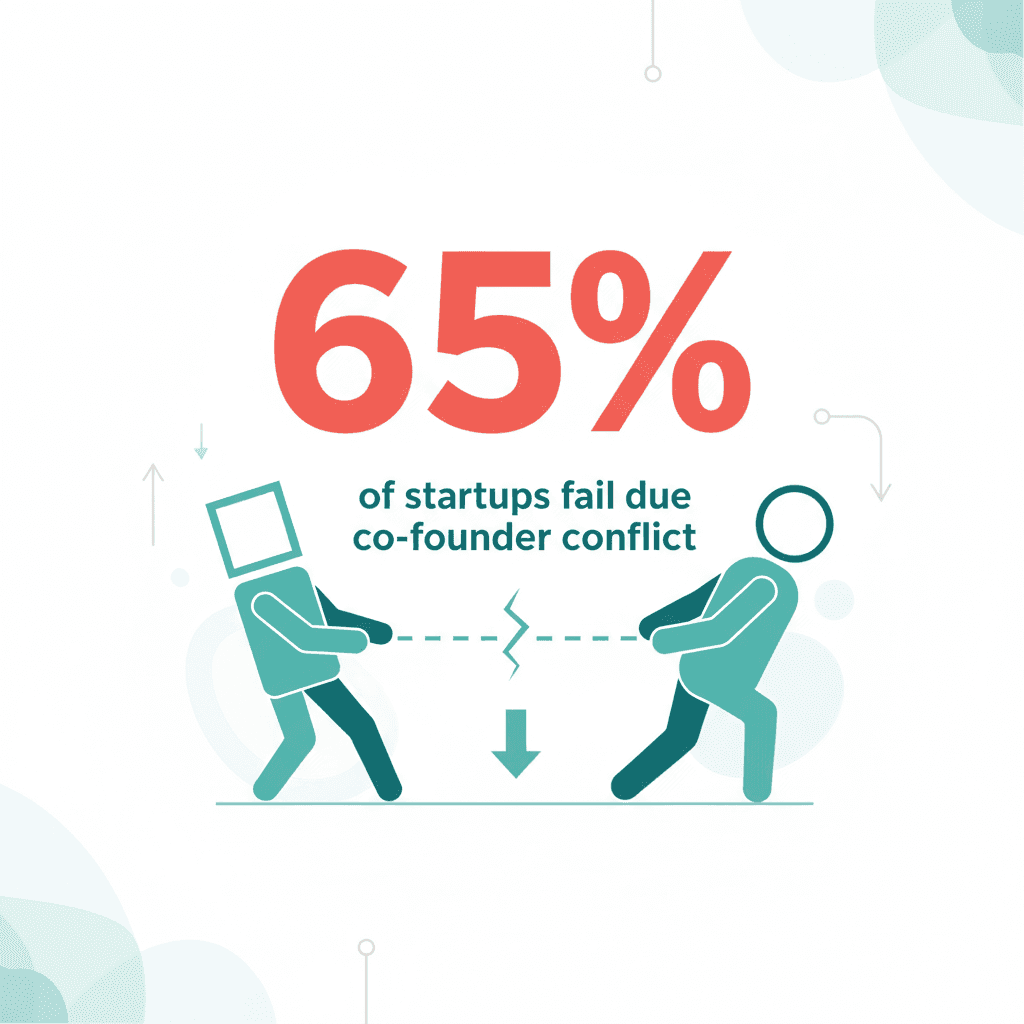
Professor Noam Wasserman at Harvard Business School, in his book "The Founder's Dilemmas" (2012, Princeton University Press), studied over 10,000 founders and found that:
- 65% of high-potential startups fail due to co-founder conflicts
- Founders who don't proactively discuss roles, equity, and vision are 2.5x more likely to be unhappy
- Friendship-based partnerships (without objective evaluation) have the highest failure risk
McKinsey Research on Joint Ventures
A McKinsey & Company study (Bamford, Ernst & Fubini, 2004), published in the Harvard Business Review, showed equally concerning results:
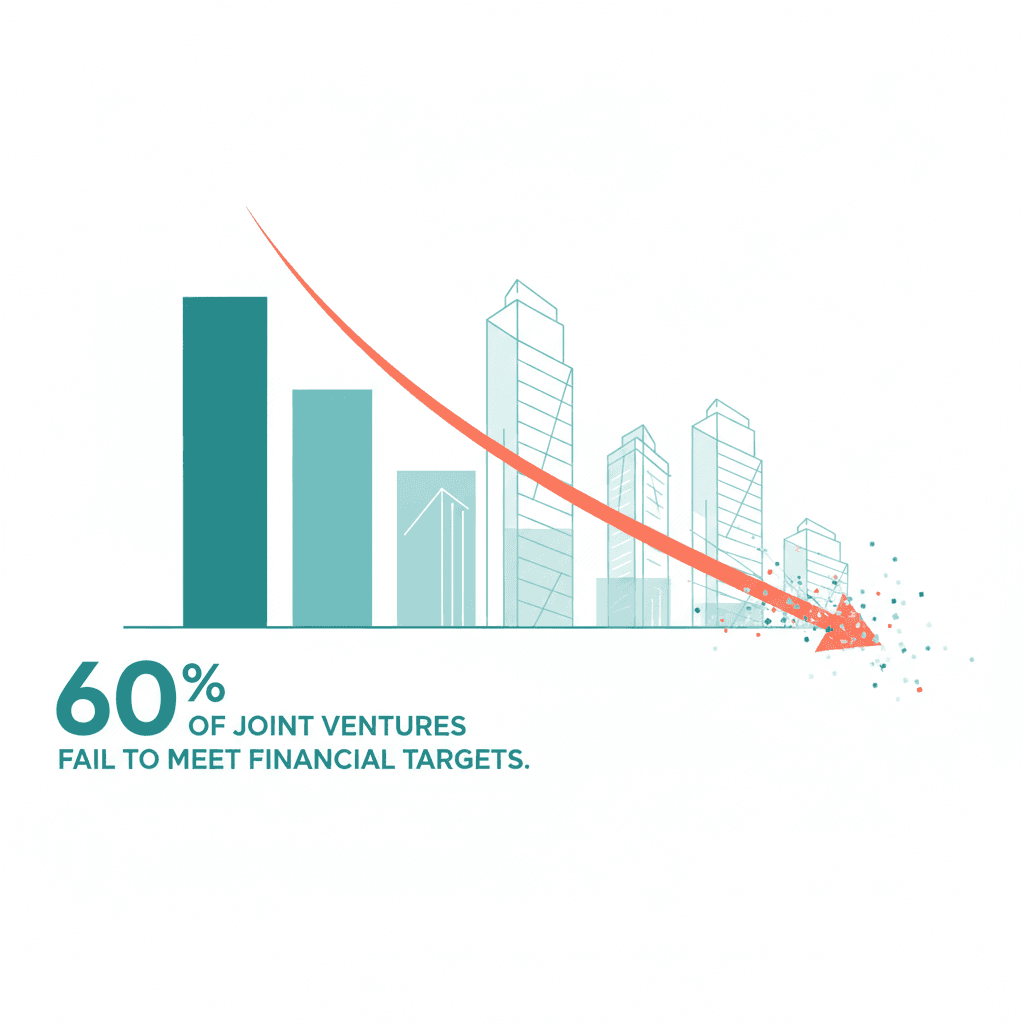
Most frequent causes: strategic misalignment, lack of clear governance, and cultural differences. But partnerships with structured pre-deal evaluations have 30% higher success rates.
What Dimensions Actually Matter
Research converges on 6 essential compatibility dimensions:

- Values Alignment — Studies by Meglino & Ravlin (1998) show that value alignment is one of the strongest predictors of satisfaction in professional relationships
- Goal Alignment — Without a shared vision, the partnership becomes two separate businesses under one roof
- Decision Style — Differences in speed and method of decision-making are a major source of conflicts (Eisenhardt, 1989)
- Leadership Style — Leadership incompatibility leads to team confusion and operational chaos
- Operational Compatibility — Incompatible processes create daily friction
- Financial Resilience — Different risk tolerances are a ticking time bomb
The #1 Risk Dimension
Scientific Proof: Structured Evaluation Works
A randomized controlled trial (RCT) by Camuffo, Gambardella et al. (2019), published in Management Science and replicated in 2024 across 759 firms, demonstrated that:
The Strongest Study in the Field
The Solution: Structured Evaluation Before Commitment
The research is clear: partnerships that go through a structured evaluation process before commitment have significantly higher success rates.

References
- Wasserman, N. (2012). The Founder's Dilemmas. Princeton University Press.
- CB Insights (2021). The Top 12 Reasons Startups Fail.
- Bamford, J., Ernst, D., & Fubini, D.G. (2004). Launching a World-Class Joint Venture. Harvard Business Review.
- Meglino, B.M. & Ravlin, E.C. (1998). Individual Values in Organizations. Journal of Management, 24(3), 351-389.
- Eisenhardt, K.M. (1989). Making Fast Strategic Decisions. Academy of Management Journal, 32(3), 543-576.
- Camuffo, A. et al. (2019). A Scientific Approach to Entrepreneurial Decision Making. Management Science. Replicated in Strategic Management Journal (2024).