The Science of Trust in Business Partnerships
Research from Harvard, MIT, and Paul Zak's neuroscience shows how trust works in business — and why high-trust companies have 50% higher productivity.
Trust is not just an abstract concept or a "soft" value — it is a biological mechanism, measurable and quantifiable, that directly influences business performance. Research from neuroscience, organizational psychology, and strategic management demonstrates that trust is the single most powerful predictor of business partnership success.
What is trust? The scientific model
In 1995, researchers Roger C. Mayer, James H. Davis, and F. David Schoorman published one of the most cited studies in the history of organizational management: "An Integrative Model of Organizational Trust", in the Academy of Management Review (Vol. 20, No. 3, pp. 709-734).
They defined trust as "the willingness of a party to be vulnerable to the actions of another party based on the expectation that the other will perform a particular action important to the trustor, irrespective of the ability to monitor or control that other party."
Their model identifies three pillars of trustworthiness:
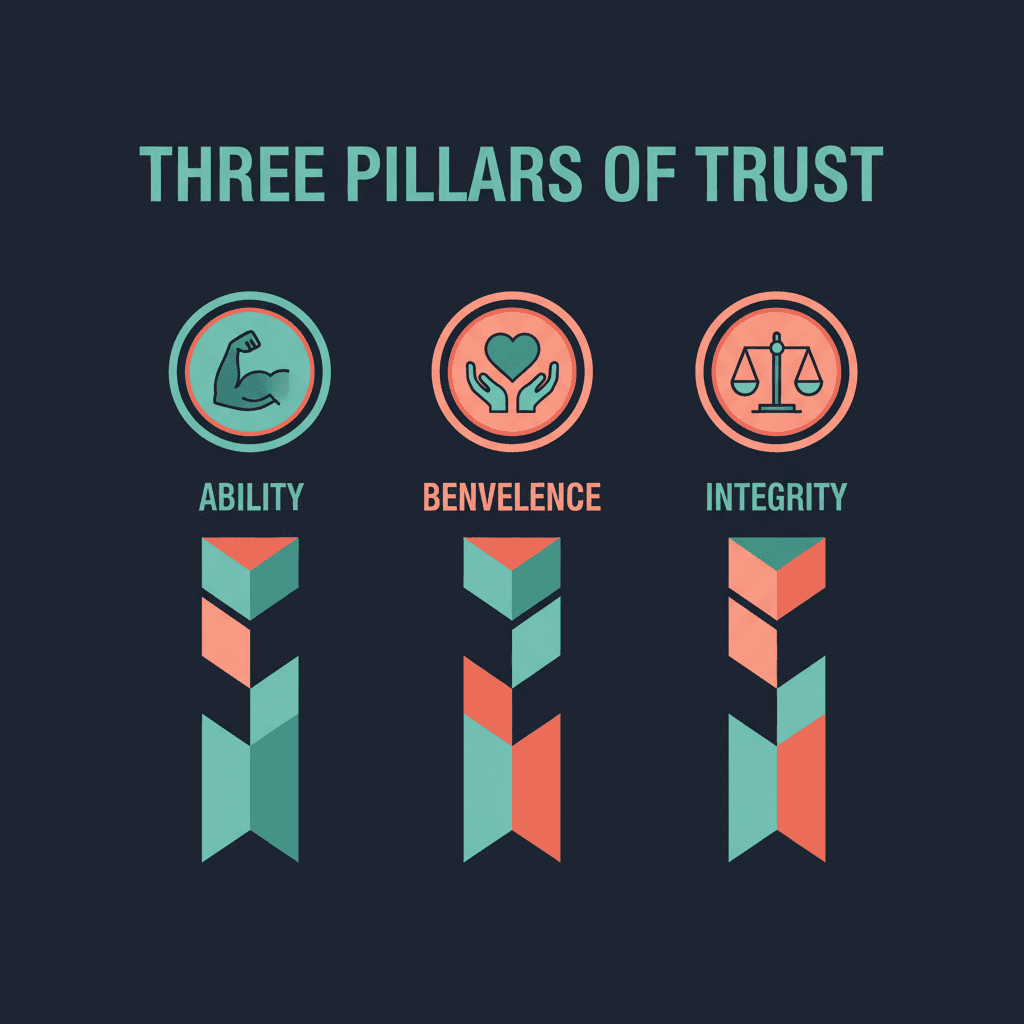
- Ability — The perception that the partner has the technical and interpersonal skills required
- Benevolence — The belief that the partner cares about your interests, not just their own
- Integrity — The perception that the partner adheres to a set of principles you find acceptable
Why this matters for partnerships
The neuroscience of trust: what happens in the brain
Paul J. Zak, professor at Claremont Graduate University and director of the Center for Neuroeconomics Studies, published groundbreaking research on the neurobiological foundations of trust. His article in Harvard Business Review (January 2017), "The Neuroscience of Trust", and his book "Trust Factor: The Science of Creating High-Performance Companies" (AMACOM, 2017) demonstrated that oxytocin — the hormone released in the brain after positive interactions — is the biological mechanism of trust.
“Oxytocin signals that the other person appears to be trustworthy. When this happens at work, work itself may be enjoyable.”
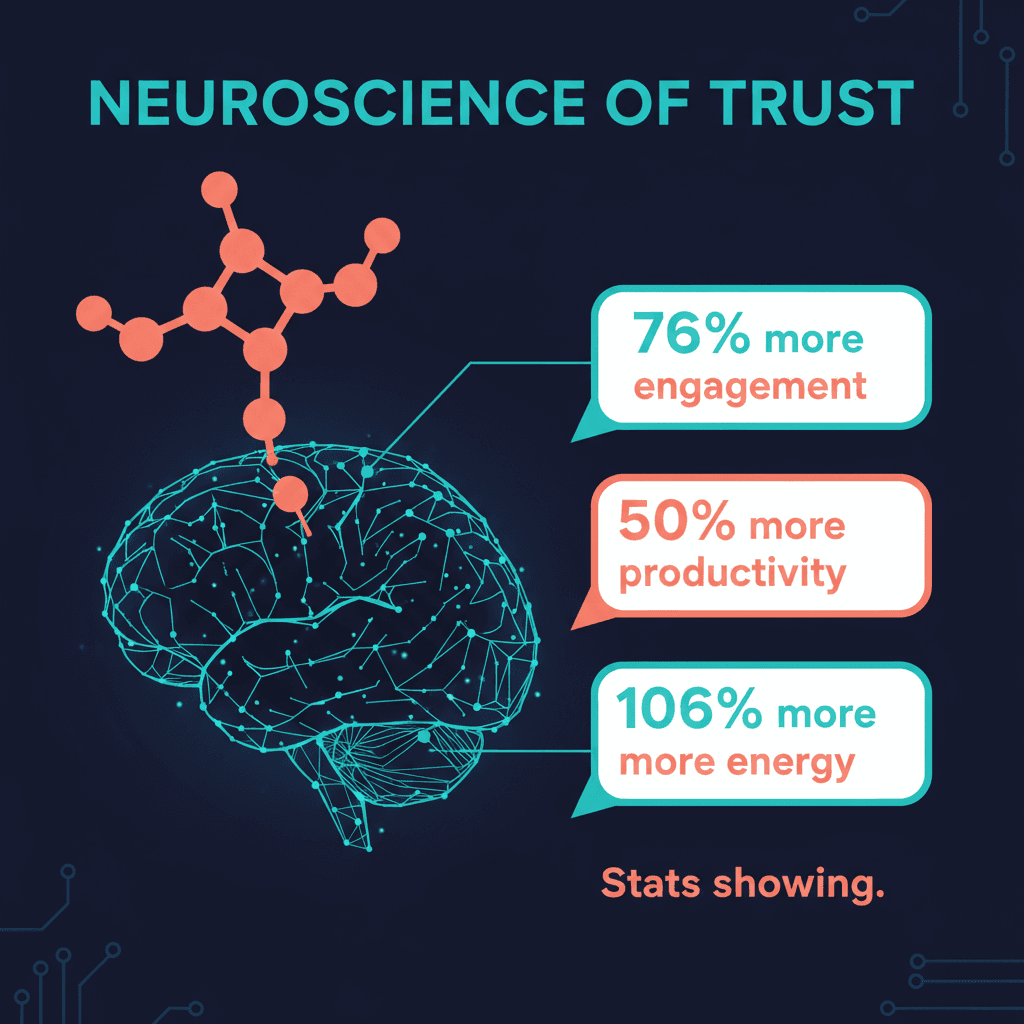
Zak's research, conducted across thousands of US employees, compared companies in the top quartile of trust with those in the bottom quartile. The results are remarkable:
Additionally, employees at high-trust companies had incomes 10.3% higher than those at medium-trust companies, and 88% more would recommend their company to family and friends as a place to work.
Swift trust in new partnerships
How does trust work when partners don't know each other? In 1996, Debra Meyerson, Karl E. Weick, and Roderick M. Kramer introduced the concept of "swift trust" in their chapter "Swift Trust and Temporary Groups", published in Trust in Organizations: Frontiers of Theory and Research (Sage Publications, pp. 166-195).
Their theory shows that temporary groups — such as project teams, joint ventures, or new partnerships — assume trust initially and adjust it later, unlike traditional relationships where trust builds gradually over time.
The risk of swift trust
Psychological safety: the foundation of high-performing teams
Amy Edmondson, professor at Harvard Business School, defined psychological safety as "a shared belief held by members of a team that the team is safe for interpersonal risk-taking" in her 1999 study, published in Administrative Science Quarterly (Vol. 44, No. 2, pp. 350-383).
Her research across 51 work teams in a manufacturing company showed that psychological safety is directly associated with learning behavior, which mediates the relationship between psychological safety and team performance.
“Better teams don't make fewer mistakes — they report them more often. Psychological safety enables honesty, not perfection.”
Google's Project Aristotle
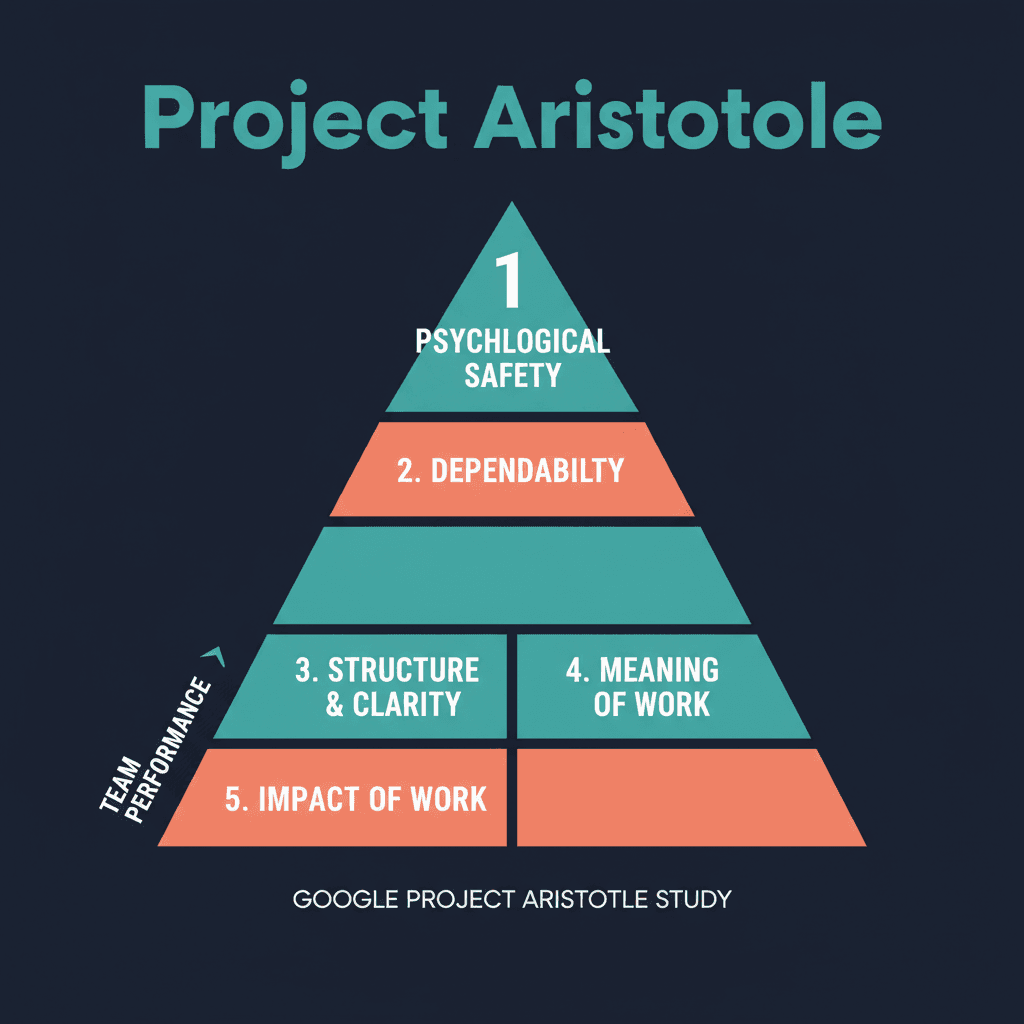
In 2012, Google launched Project Aristotle — a two-year study of over 180 teams — to discover what makes teams effective. The main conclusion? Psychological safety was the most important factor, more important than team composition, seniority, education, or personality types.
The five key dynamics identified were: psychological safety, dependability, structure and clarity, meaning, and impact. But psychological safety was the foundation upon which all others were built.
The economic impact of trust in partnerships
PwC's research data is compelling: trust explains 31% of the variance in profit margins and 21% of the variance in ROA (Return on Assets) across the companies studied.
According to aggregated data, approximately 60-70% of business alliances fail (Hughes & Weiss, Harvard Business Review, 2007), and 60% of these dissolve due to trust breakdown — often because partners fail to adapt to changing circumstances or stop nurturing their relationships.
Repairing trust: what the science says
What happens when trust is violated? Research by Peter H. Kim, Donald L. Ferrin, Cecily D. Cooper, and Kurt Dirks, published in the Journal of Applied Psychology (2004, Vol. 89, No. 1, pp. 104-118), discovered that the repair strategy depends on the type of violation:
- Competence violations (mistakes, lack of skills): trust is better repaired through apology and taking responsibility
- Integrity violations (dishonesty, deception): trust is better repaired through denial of culpability (when evidence of innocence exists)
Implications for partnerships
Kim, Dirks, and Cooper later developed a Bilateral Model of Trust Repair(published in Academy of Management Review, 2009), showing that trust repair is more difficult with groups than with individuals — making multi-founder partnerships especially vulnerable.
The OXYTOCIN framework for building trust
Based on his research, Paul Zak developed a practical framework with the acronym OXYTOCIN, representing eight behaviors that stimulate organizational trust:
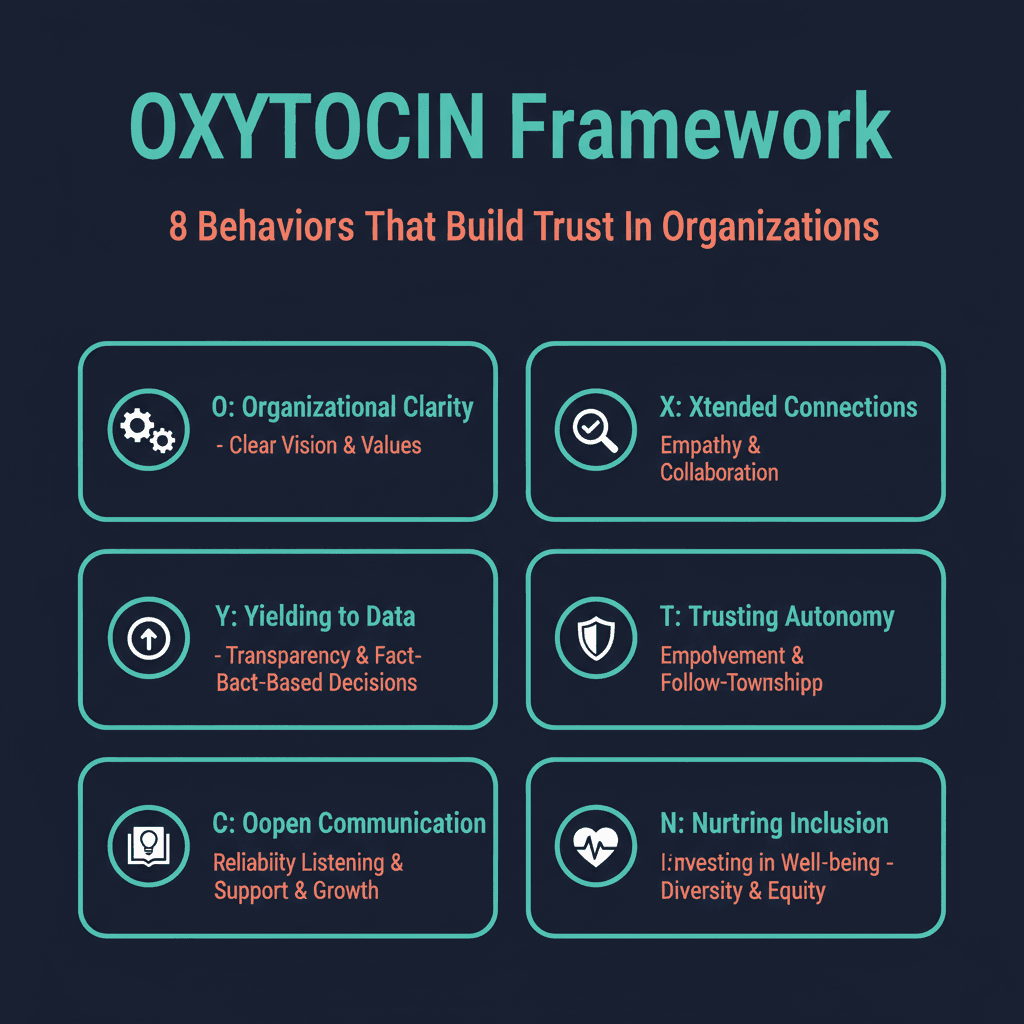
- Ovation — Recognizing contributions
- eXpectation — Setting clear expectations
- Yield — Yielding control when appropriate
- Transfer — Enabling self-management
- Openness — Full transparency
- Caring — Genuine care for partners
- Invest — Investing in people's growth
- Natural — Authenticity in leadership
These behaviors apply directly to business partnerships as well. A partnership with transparency, recognition, and clear expectations has significantly higher chances of success.
How to measure trust in a partnership
Based on the research presented, trust in a partnership can be evaluated by analyzing the following dimensions:
How Venn helps
Conclusions
The science is clear: trust is not optional in business partnerships — it is essential. From the Mayer-Davis-Schoorman model to Paul Zak's neuroscience research, from Amy Edmondson's psychological safety to Google's Project Aristotle, the evidence converges on the same conclusion: partnerships built on trust perform dramatically better.
The good news? Trust can be evaluated, measured, and cultivated. But the first step is understanding where you stand — and where the vulnerabilities are.
References
- Mayer, R. C., Davis, J. H. & Schoorman, F. D. (1995). An Integrative Model of Organizational Trust. Academy of Management Review, 20(3), 709-734.
- Zak, P. J. (2017). The Neuroscience of Trust. Harvard Business Review, January-February 2017.
- Zak, P. J. (2017). Trust Factor: The Science of Creating High-Performance Companies. AMACOM.
- Meyerson, D., Weick, K. E. & Kramer, R. M. (1996). Swift Trust and Temporary Groups. In R. M. Kramer & T. R. Tyler (Eds.), Trust in Organizations (pp. 166-195). Sage.
- Edmondson, A. (1999). Psychological Safety and Learning Behavior in Work Teams. Administrative Science Quarterly, 44(2), 350-383.
- Kim, P. H., Ferrin, D. L., Cooper, C. D. & Dirks, K. T. (2004). Removing the Shadow of Suspicion. Journal of Applied Psychology, 89(1), 104-118.
- Kim, P. H., Dirks, K. T. & Cooper, C. D. (2009). The Repair of Trust: A Dynamic Bilateral Perspective. Academy of Management Review, 34(3), 401-422.
- PwC (2023). Trust in US Business Survey. PwC Research.
- Google re:Work (2015). Guide: Understand Team Effectiveness (Project Aristotle).