How to Split Equity Between Co-Founders: What Research Says
Harvard studies, Carta data from 15,000+ startups, and investor perspectives on how to split equity fairly. 50/50 or something else?
How you split equity in a startup is one of the most important — and most uncomfortable — decisions co-founders need to make. Research shows that how equity is divided directly influences the odds of success, the relationship between founders, and the ability to attract investment.
But is 50/50 always the best option? Academic research provides a more nuanced answer than you might expect.
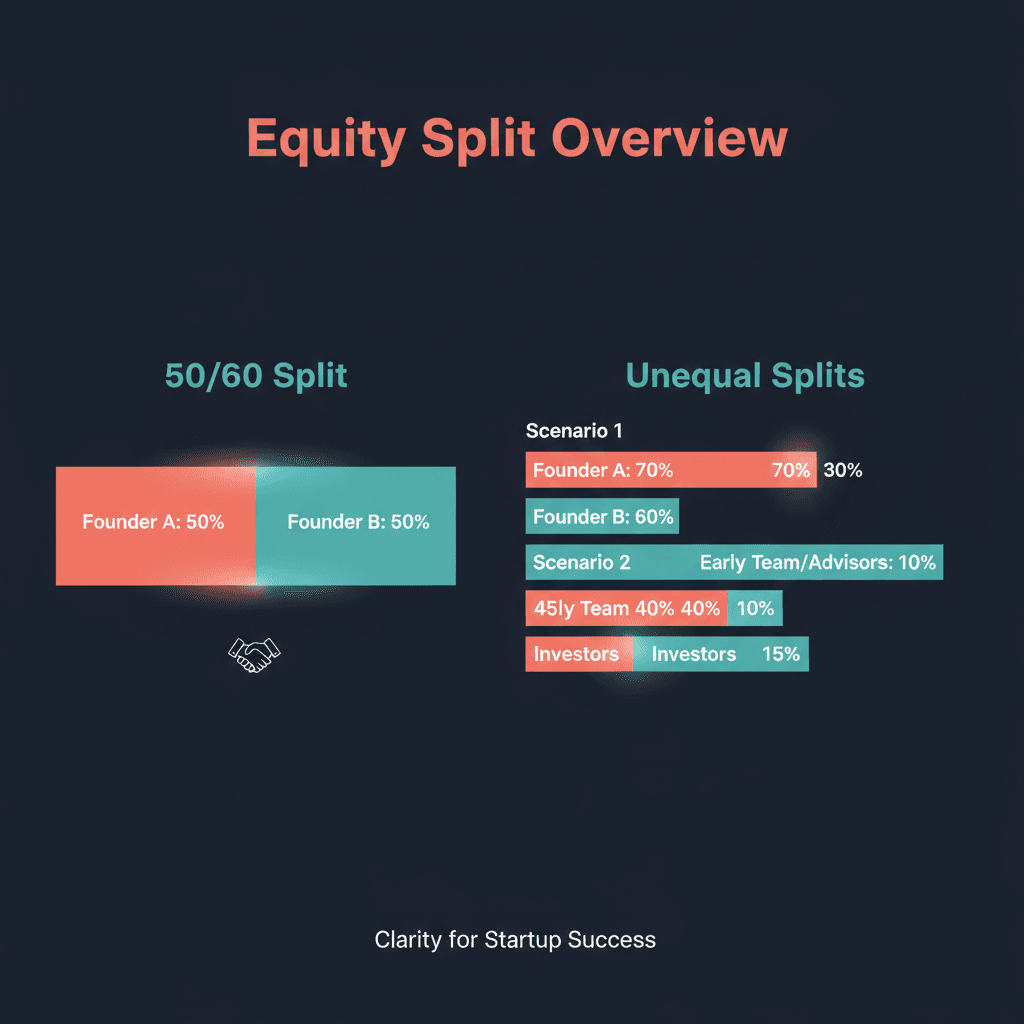
What Harvard Research Says About 50/50
Professor Noam Wasserman at Harvard Business School, together with Thomas Hellmann (University of Oxford), conducted the most comprehensive academic study on this topic. Published in Management Science (2016), their findings from 1,476 founders across 511 startups were surprising:
Key Finding
But context matters. Wasserman and Hellmann found that the equal split itself is not the problem — the reason behind it is. Teams that arrived at 50/50 after a serious discussion achieved valuations similar to those with unequal splits. Problems arise when 50/50 is chosen quickly, to avoid a difficult conversation.
“Equal splitting is often a sign that the founding team has failed to have a difficult but necessary conversation about their relative contributions and roles.”
Carta's Data: How Splits Are Evolving
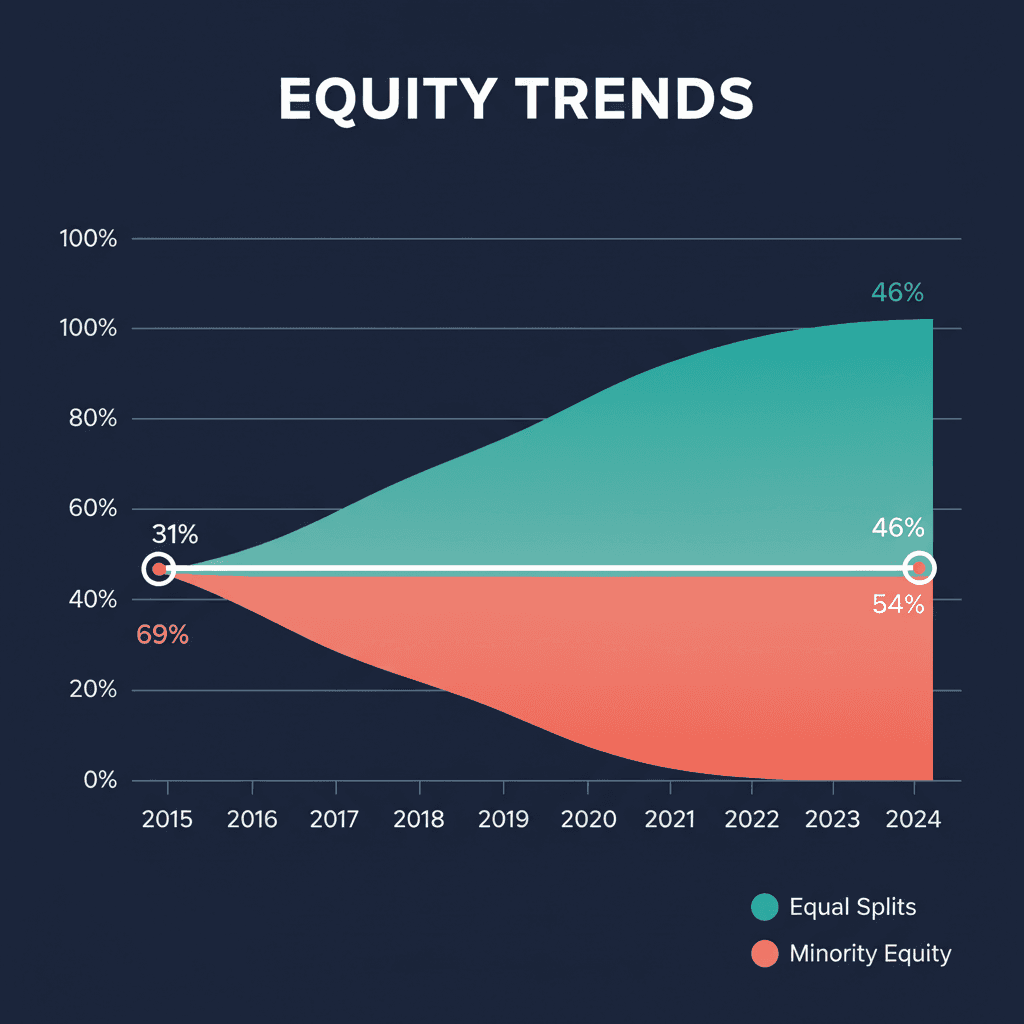
Carta, which manages cap tables for thousands of startups, published a 2024 analysis of 15,000+ two-founder startups. The trends are clear:
In 2019, the median equity split was 60-40. By 2024, it had narrowed to 51-49. The trend is clear: founding teams are moving toward more equal splits, likely because all co-founders are increasingly committed full-time from the start.
What Investors (VCs) Think
The investor perspective often differs from founders. Experienced investors, including Mark Suster (Upfront Ventures) and others, have emphasized that:
The VC Perspective
- A 50/50 split can be a red flag — it suggests the CEO could not negotiate or manage a difficult conversation
- An extreme split (90/10) is equally problematic — it suggests one co-founder is not truly invested
- Investors use the equity split as an indicator of decision-making maturity within the team
According to Carta data, after a seed round, the founding team collectively owns 56.2% of equity. At Series A, that figure drops to 36.1%, and at Series B, it's 23%. This means the initial split matters enormously — every percentage point lost at the beginning compounds with each round.
Why Equity Conversations Fail
Wasserman's research on over 6,000 startups over 15 years identified the main reasons founders avoid serious equity discussions:
- Fear of conflict — founders are excited about the idea and don't want to "ruin the vibe"
- Assumption of equality — "we're friends, everything is 50/50, right?"
- Lack of information — they don't know what factors should influence the decision
- Urgency to start — "we'll figure it out later" (but rarely do)
The Slicing Pie Model: A Dynamic Alternative
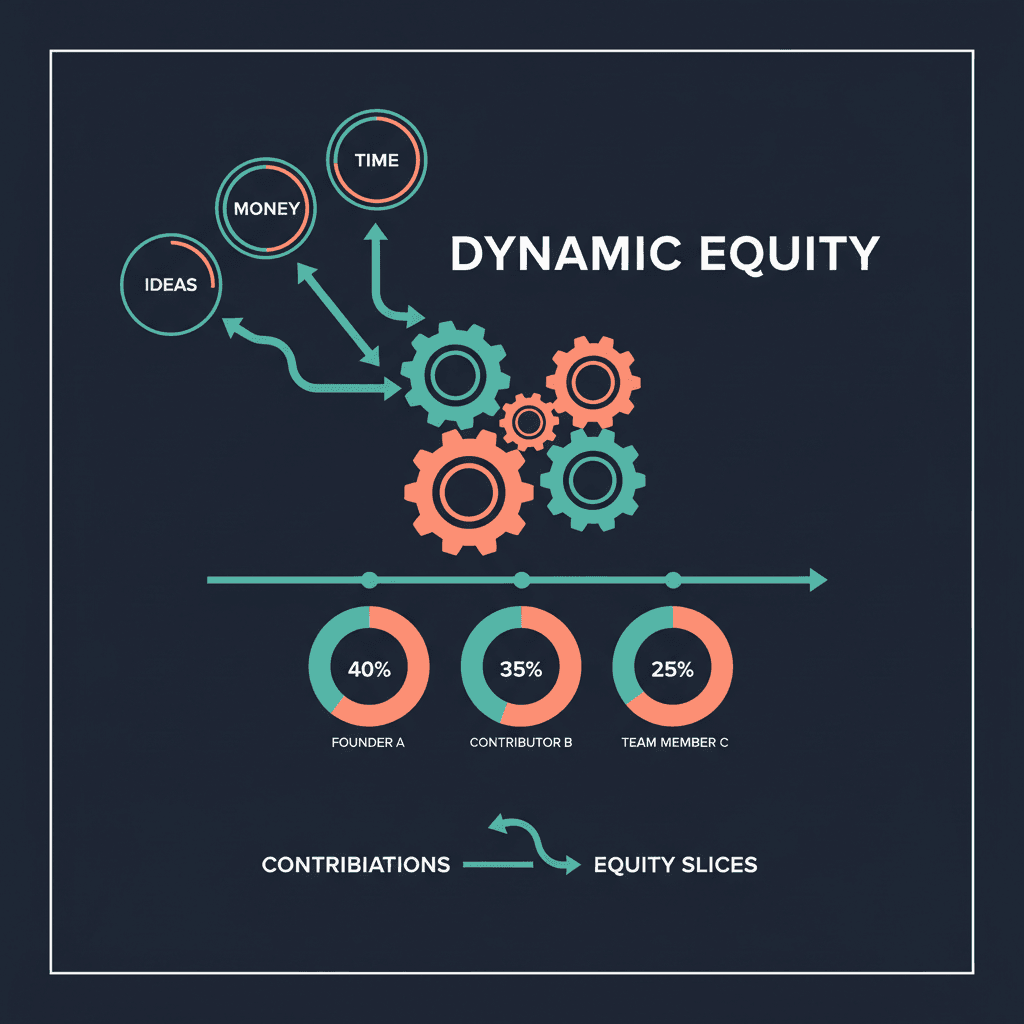
Professor Mike Moyer (Northwestern University) proposed an alternative model in his book "Slicing Pie" (2012). The concept: equity should be dynamic, not fixed.
How Slicing Pie Works
Every contribution (time, money, ideas, relationships, equipment) is converted into a normalized unit called a "Slice." Your percentage of equity always equals your percentage of total Slices. The model self-adjusts as contributions accumulate.
The model is grounded in game theory and solves a fundamental problem: it is impossible to predict at the outset how much each founder will contribute. By transparently tracking contributions, conflicts are significantly reduced.
Factors That Should Influence the Split
Hellmann and Wasserman's research (2016, Management Science) identified three factors that reduce the likelihood of an equal split — and for good reason:
- Who had the idea — the founder with the original idea brings an asymmetric initial contribution
- Prior entrepreneurial experience — experienced founders reduce risk and bring valuable knowledge
- Capital contribution — founders who invest personal money take on additional risk
Additional factors to consider include:
- Level of commitment — full-time vs. part-time
- Opportunity cost — what salary each person is sacrificing
- Unique skills — rare technical skills or client networks
- Vesting — an essential protection mechanism
Don't Forget Vesting!
How to Have the Equity Conversation
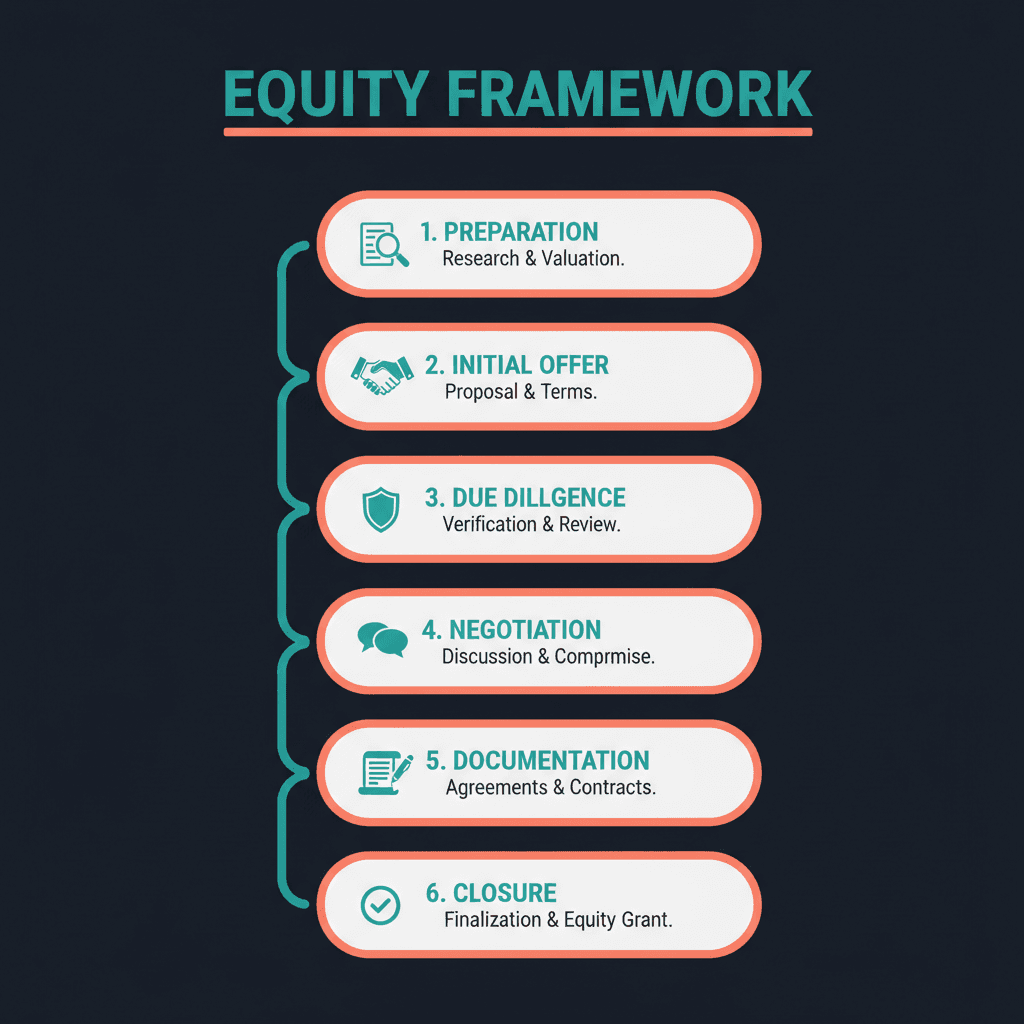
Wasserman's research and Carta's data converge on a clear message: it matters less what split you choose than how you arrive at it. Here is a research-based framework:
- Discuss early — before writing the first line of code or making the first pitch
- Identify contributions — who brings what (idea, capital, skills, relationships)
- Assess commitment — who is full-time, who has another job
- Establish vesting — 4 years with a 1-year cliff is the standard
- Document everything — a written co-founder agreement is mandatory
- Plan for revision — at 6-month intervals or at key milestones
“The teams that had a quick equal split received considerably lower valuations than teams that had a well-considered equal split or unequal split.”
Conclusion: The Process Matters More Than the Percentages
The research is surprisingly clear. There is no universally "perfect" split. 50/50 can work beautifully if it is the result of an honest discussion. An unequal split can be perfectly fair. What truly matters is:
- Having the conversation — seriously, honestly, early
- Understanding each person's real contributions
- Implementing protection mechanisms (vesting, cliff)
- Being willing to revisit the agreement over time
How Venn Can Help
Venn helps you have the difficult conversations before they become problems. By evaluating compatibility across 6 dimensions (values, goals, decision style, leadership, operations, finances), Venn identifies areas of alignment and risk — in just 10 minutes, free and confidential.
References
- Hellmann, T. & Wasserman, N. (2016). The First Deal: The Division of Founder Equity in New Ventures. Management Science, 63(8), 2647–2666.
- Wasserman, N. (2012). The Founder's Dilemmas. Princeton University Press.
- Carta (2024). Founder Equity Split Trends.
- Moyer, M. (2012). Slicing Pie: Funding Your Company Without Funds.
- Moyer, M. (2016). The Slicing Pie Handbook: Perfectly Fair Equity Splits for Bootstrapped Startups.